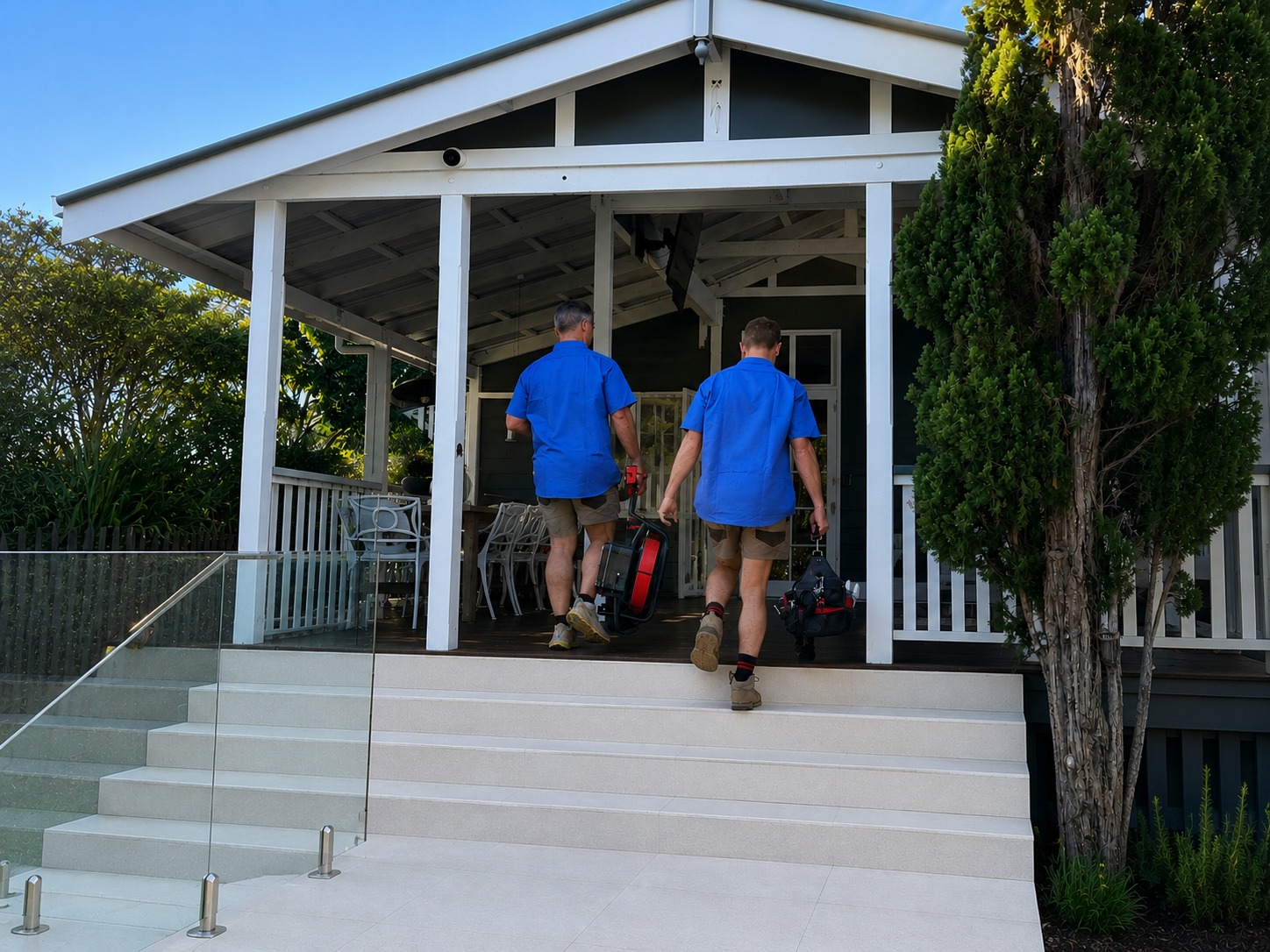
A building and pest inspection is a standard, sensible step before buying a property. But most building inspectors are generalists — they’re trained to look broadly across a property’s structure, safety, and pest activity. Plumbing is its own trade, with its own standards, and it’s easy for issues to go unnoticed by someone who isn’t a licensed plumber. At Pre-Purchase Plumbing Inspections Australia, this is the gap we exist to close.
Here’s where we most commonly find the gaps show up.
Leaks that aren’t visible yet
A dripping tap or a stained ceiling is easy to spot. A slow leak inside a wall cavity, under a slab, or behind tiled surfaces is not. These leaks can run for months — sometimes years — before they show up as visible damage, and by then the repair bill (and any mould remediation) is far larger than it would have been if caught early. We use specialised leak detection equipment that isn’t part of a standard building inspection.
Stormwater and drainage issues
Whether stormwater is draining away from a property correctly, or pooling against foundations, is a plumbing and drainage question — not a structural one. A building inspector might note visible damp or a damaged downpipe, but assessing whether the whole drainage system is coping, and whether it’s connected correctly, calls for the kind of plumbing expertise we bring to every inspection.
Unapproved or non-compliant work
Renovated kitchens and bathrooms are a big drawcard for buyers — but not all renovation plumbing is done to code, and not all of it is done by a licensed plumber. DIY alterations, unapproved pipe relocations, or work that was never registered with the QBCC can be invisible to the eye but create real compliance and safety risks down the line. We’re trained to spot the signs.
Hot water system condition and installation
Hot water systems have a limited lifespan, and how (and where) they’re installed matters for both compliance and safety. A visual walkthrough might confirm a system is present and working on the day, but it won’t necessarily catch installation issues or flag that a unit is close to the end of its working life — something we check on every job.
Backflow and cross-connection risks
Backflow prevention protects a property’s drinking water from contamination, and it’s a legally regulated area of plumbing work. It’s a technical area that falls well outside the scope of a general building report, but well within ours.
“Building inspected” isn’t “plumbing inspected”
Building inspectors do a broad job well. Plumbing just isn’t part of that brief in most cases — it’s a separate trade, with its own standards and its own equipment.
Already got a building and pest inspection lined up? Add a Pre-Purchase Plumbing Inspections Australia inspection to the same visit and we’ll flag anything the general report wouldn’t have picked up.